
When Is the Best Time to Tour Lesotho?
Season-by-season weather, scenery and snow chances to help plan your trip.
The Seasons of Lesotho
One of the things that makes Lesotho so unique is how dramatically the weather changes throughout the year.
Known as the “Kingdom in the Sky,” Lesotho is the only country in the world with all of its land situated above 1,000 metres above sea level. Because of this, temperatures are often much cooler than many visitors expect, even during summer.
Mountain weather can also change quickly, and conditions vary significantly depending on altitude. Lower valleys may feel warm and pleasant while high mountain passes such as Sani Pass, which summits at roughly 2,800 to 2,900 metres, experience freezing temperatures, mist or even snow.
Understanding the seasons can help visitors choose the best time to experience the type of Lesotho adventure they are looking for.

November – February
Summer in Lesotho
Summer transforms Lesotho into a lush green mountain landscape filled with flowing rivers, dramatic cloud formations and wildflowers.
This is the rainy season, and afternoon thunderstorms are fairly common, particularly in the highlands. While daytime temperatures are usually warm and pleasant, evenings in the mountains can still become surprisingly cool.
Waterfalls are often at their most impressive during summer due to the increased rainfall, and the scenery feels incredibly vibrant and alive.
Things to Keep in Mind:
Afternoon storms can develop quickly. Gravel roads may become rougher after heavy rain. Mist and fog are more common during this season
Season Highlights
- Green mountain landscapes
- Flowing waterfalls and rivers
- Wildflowers and dramatic skies
- Warm daytime temperatures
- Beautiful hiking and cycling conditions

March – May
Autumn in Lesotho
Autumn is often considered one of the best overall times to visit Lesotho.
The summer rains begin easing, the skies become clearer and the mountain visibility is often absolutely spectacular. Temperatures are cooler and more stable, creating ideal conditions for road trips, photography, hiking and cycling.
Mornings in the mountains can feel crisp and refreshing, while daytime conditions are usually mild and comfortable.
This is also one of the quieter times of year for tourism in many areas.
Season Highlights
- Clear mountain views
- Stable weather conditions
- Crisp mornings and cool evenings
- Excellent photography conditions
- Fantastic hiking and cycling weather

June – August
Winter in Lesotho
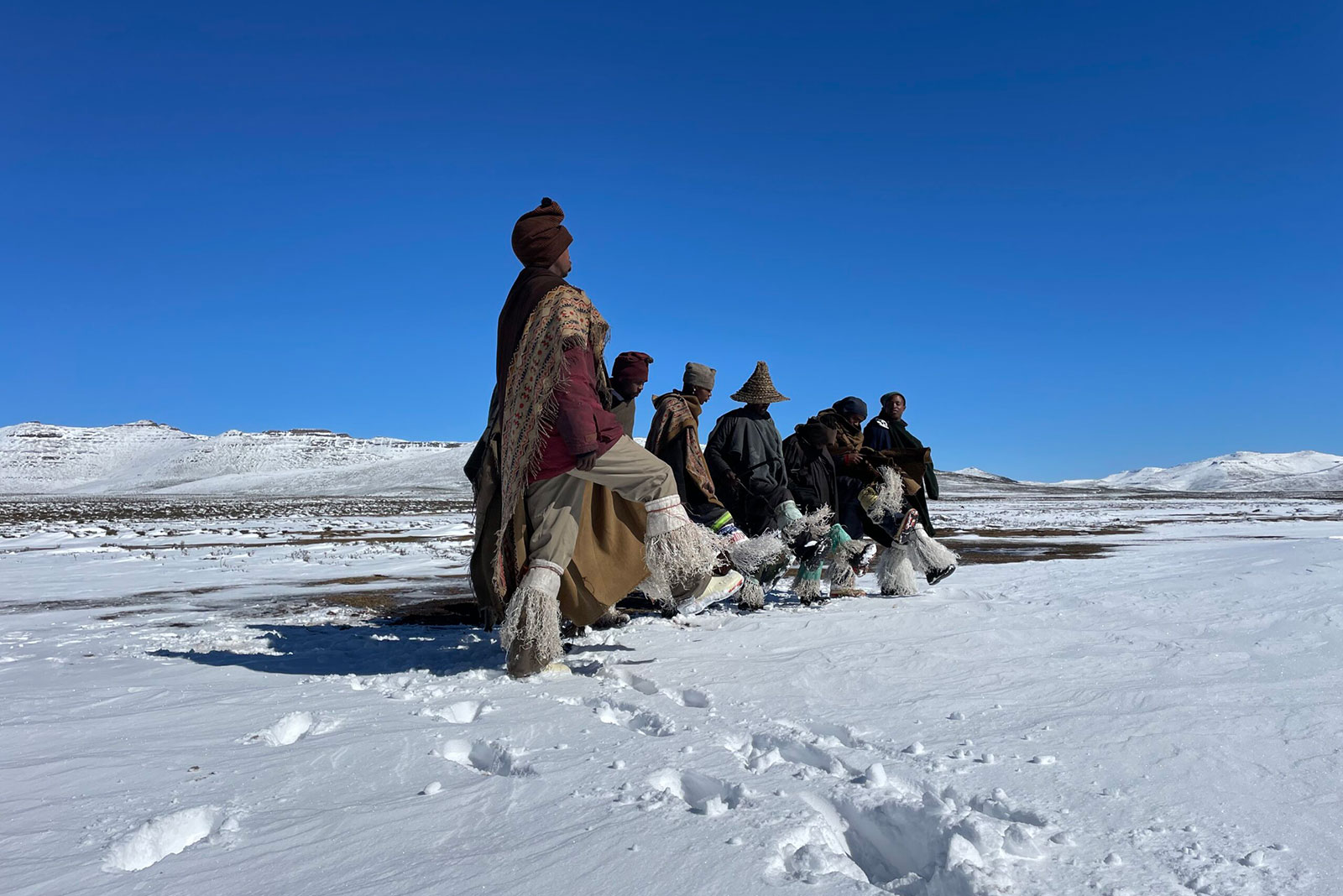
Winter brings cold temperatures, dry mountain air and the possibility of snow.
Lesotho becomes one of the very few places in Southern Africa where visitors regularly travel specifically hoping to experience snowfall. Snow is most common in the higher mountain regions and along passes such as Sani Pass.
Winter visibility is often incredibly clear, with crisp blue skies and dramatic mountain views stretching for kilometres.
However, temperatures can drop well below freezing at night, especially in the highlands. Frost, ice and occasional snowfalls can also affect road conditions.
Season Highlights
- Snow possibility
- Crisp mountain visibility
- Dry weather conditions
- Dramatic winter scenery
- Excellent 4×4 touring conditions

September – October
Spring in Lesotho
Spring is a beautiful transition season in Lesotho.
The mountains begin warming up again after winter, the landscapes slowly turn greener and temperatures become more comfortable for outdoor activities.
Spring usually feels quieter than peak winter snow periods and offers a great balance between cooler mountain weather and improving conditions.
It is also an excellent season for hiking, cycling and exploring the highlands before the heavier summer rains arrive.
Season Highlights
- Warming temperatures
- Fresh mountain scenery
- Comfortable outdoor conditions
- Less crowded travel periods
- Excellent hiking and cycling weather
When Is the Best Time to Visit Lesotho?
There really is no bad time to visit Lesotho; it simply depends on the type of experience you are looking for.
- Best for snow: June to August, with occasional large snowfalls also possible in September.
- Best for hiking: Autumn and spring usually offer the most comfortable and stable hiking conditions.
- Best for photography: Autumn is often considered the best season for visibility and clear mountain landscapes.
- Best for Green Scenery: Summer brings lush green mountains, flowing waterfalls, and dramatic skies.
- Best for Cycling: Summer, autumn, and spring generally offer the best cycling conditions in the highlands.
The good news: there’s no wrong season. 4×4 tours run on Sani Pass year-round, and every season offers a completely different but equally memorable experience.
At Lesotho On Track, we operate guided Sani Pass tours throughout the year and are always happy to help you choose the best season for the experience you’re after.
What's the One Thing Visitors Underestimate About Lesotho Weather?
The biggest thing visitors underestimate about Lesotho weather is the altitude.
Even during summer, temperatures can drop quickly once the sun sets, particularly in the mountains. Layered clothing is always recommended no matter the season.
The weather is part of what makes Lesotho feel so wild, remote and adventurous, and often becomes one of the most memorable parts of travelling through the mountain kingdom.
At Lesotho On Track, we operate guided Lesotho tours year-round from Underberg and are always happy to help visitors choose the best season based on the type of experience they are hoping for.
FAQ's: When to visit Lesotho
What is the best time of year to visit Lesotho?
There’s no single best time to visit Lesotho; it depends on what you want. Autumn and spring offer the most stable weather for hiking and photography; winter is best for snow, and summer brings lush green scenery and flowing waterfalls.
Does it snow in Lesotho?
Yes. Lesotho regularly gets snow between June and August, particularly in the higher mountain regions and along Sani Pass, making it one of the few places in Southern Africa where visitors can experience snowfall.
How cold does Lesotho get?
Winter nights in the Lesotho highlands regularly drop well below freezing, especially at altitude. Even in summer, evenings in the mountains can turn surprisingly cold, so layered clothing is essential year-round.
What is the rainy season in Lesotho?
Lesotho’s rainy season runs from November to February, with afternoon thunderstorms common in the highlands. Rain can make gravel roads rougher and reduce visibility, so travellers should check conditions before long mountain drives.
Is Lesotho hot in summer?
Daytime temperatures in Lesotho are usually warm and pleasant during summer, but the country’s high altitude means evenings stay cooler than typical Southern African summers, even in the valleys.
Contact us to start planning an amazing Lesotho Adventure.
An Adventure Awaits in Africa's Hidden Paradise
Contact Us Here
Address
Shop 21, Troutwalk Centre, 12 Sani Road, Underberg, 3257, KZN, South Africa
Call or WhatsApp us
+27 (0) 72 900 2304
Popular Articles
Popular Tours
About Lesotho on Track
2026 Lesotho on Track.
