
What Vehicle Do You Need for Sani Pass?
Why low-range 4x4 is legally required and why not all SUVs make the cut.
Sani Pass Vehicle Requirements
One of the biggest misconceptions about Sani Pass is that any SUV or “off-road looking” vehicle can drive it safely. The reality is very different. Sani Pass is a serious mountain road with steep gradients, loose rock sections, river runoff, changing weather conditions and high-altitude terrain. Choosing the correct vehicle is one of the most important parts of preparing for the pass.
No low-range, no entry
Is a 4x4 Required for Sani Pass?
Yes. A proper low-range 4×4 vehicle is legally required to drive Sani Pass.
This is especially important on the final section near the Lesotho border, where the road becomes significantly steeper, rougher and more technical.
Border officials may refuse entry to vehicles that do not meet the legal requirements.


gear ratio that keeps you in control
What Does “Low Range” Actually Mean?
Low range refers to a secondary gear ratio found in proper 4×4 vehicles. It provides extra torque and slow-speed control for steep climbs, rough terrain and difficult descents.
In simple terms, low range allows the vehicle to:
- Climb steep sections more safely
- Descend slowly without overusing brakes
- Maintain better control on rough surfaces
- Reduce strain on the vehicle
This is very different from standard AWD (all-wheel drive) systems found in many SUVs and crossovers.
They are not the same thing
AWD vs Low-Range 4x4
This is where many visitors get caught out.
Many modern SUVs advertise themselves as “off-road capable”, but AWD and low-range 4×4 are not the same thing.
AWD systems are generally designed for light gravel roads, wet roads or mild off-road conditions. They often do not have the low-range gearing needed for steep mountain passes like Sani Pass.
Vehicles without low range may struggle on loose rocky climbs, wet or muddy sections, snow and ice, and steep descents.

Low clearance means trouble
Why Ground Clearance Matters
Ground clearance is another major factor on Sani Pass. Heavy rains often create erosion channels, exposed rocks and uneven surfaces that lower vehicles may struggle to clear safely. A vehicle with poor clearance risks damaging its underbody or getting stuck.
Road conditions can vary dramatically depending on recent weather and maintenance work. A section that feels manageable one week can become significantly more difficult after heavy rain.
Tread, condition and tyre pressure
Tyres Make a Huge Difference
Tyres are often overlooked, but they play a massive role on Sani Pass. Good quality tyres with decent tread improve traction on gravel, grip in muddy conditions, stability on rocky sections, and safety during descents.
Worn road tyres can become a serious problem, particularly during wet or icy conditions. Slightly deflating tyres before tackling the pass can also help improve traction and ride comfort on rougher sections.
Low gears, no unnecessary stops
Practical Driving Tips for Sani Pass
If you are planning to self-drive Sani Pass, preparation is extremely important.
A few helpful tips include:
- Slightly deflate tyres for improved traction
- Never stop unnecessarily on steep sections
- Use low gears and engine braking when descending
- Avoid excessive braking downhill
- Carry basic recovery gear where possible
- Ensure you have enough fuel before travelling (there is no fuel station at the top!)
Guided Tours Are a Great Alternative
For visitors without the correct vehicle or off-road driving experience, joining a guided tour is often the safest and most enjoyable option.
Instead of concentrating on difficult driving conditions, guests are able to relax and enjoy the scenery, cultural experiences and incredible viewpoints along the route.
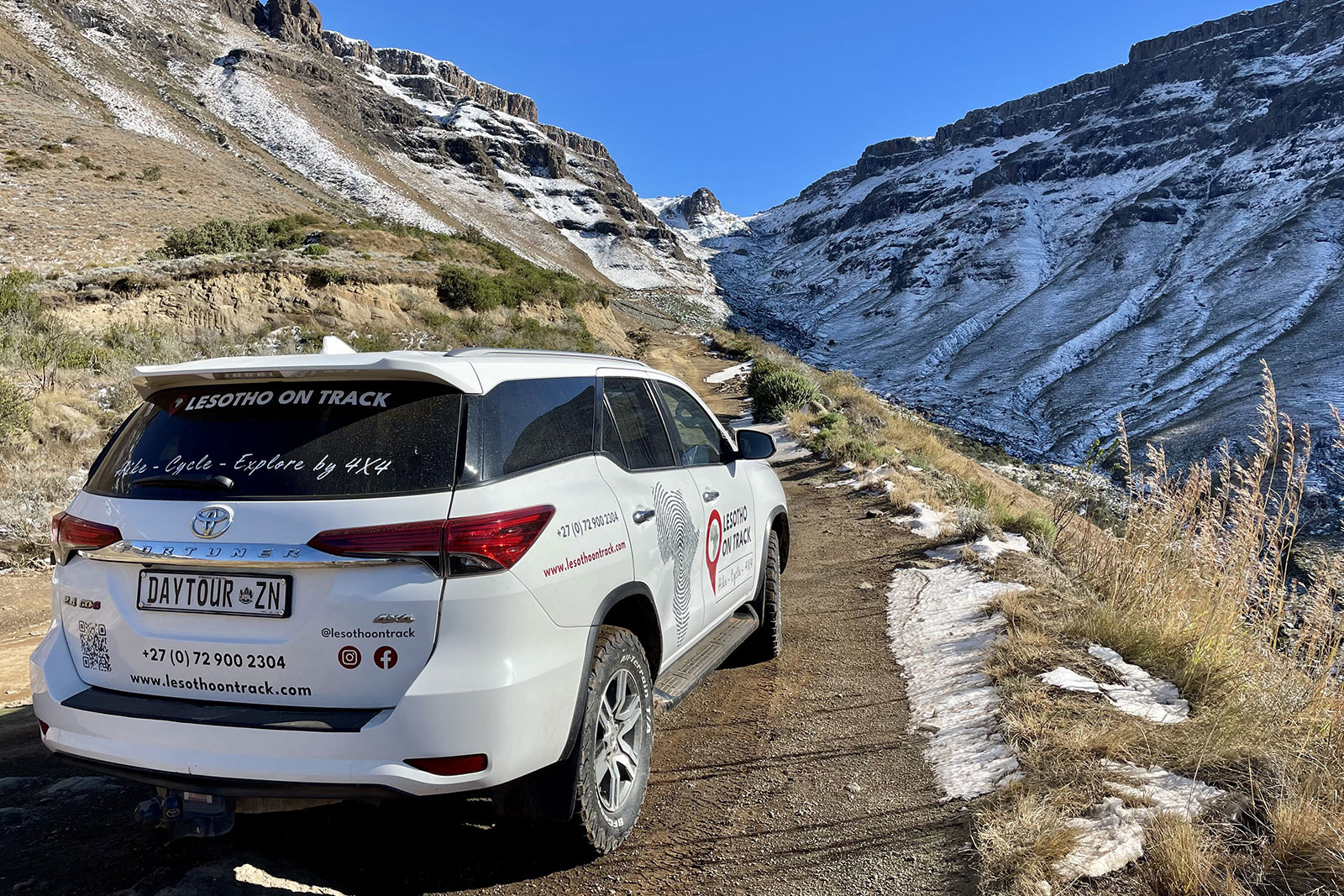
At Lesotho On Track, our experienced guides drive the pass year-round in meticulously maintained 4×4 vehicles specifically suited to mountain conditions.
Your Adventure Starts Here
Sani Pass 4x4 Tour Packages
FAQ's: Sani Pass Vehicles Requirements
Is a 4x4 legally required for Sani Pass?
Yes, a proper low-range 4×4 is legally required to drive Sani Pass. Border officials at the Lesotho border post may refuse entry to vehicles that don’t meet the requirement.
Can I drive Sani Pass in an SUV?
Not all SUVs are suitable. Many modern SUVs use AWD systems rather than genuine low-range 4×4 gearing, which is not adequate for Sani Pass’s steep gradients, loose rock sections and technical descents.
What is the difference between AWD and low-range 4x4?
AWD is designed for light gravel, wet roads and mild off-road conditions. Low-range 4×4 provides a secondary gear ratio that gives extra torque and slow-speed control for steep climbs, rough terrain and demanding descents, which is what Sani Pass requires.
Does ground clearance matter on Sani Pass?
Yes. Heavy rain regularly creates erosion channels, exposed rocks and uneven surfaces on the pass. Vehicles with poor ground clearance risk damaging their underbody or getting stuck, particularly after recent rainfall.
What type of tyres do you need for Sani Pass?
Good quality tyres with decent tread are strongly recommended. Worn road tyres can become dangerous on loose gravel, mud or ice. Slightly deflating tyres before the drive can also improve traction and ride comfort on rougher sections.
What should I know before self-driving Sani Pass?
Key tips include: slightly deflating tyres for better traction, using low gears and engine braking on descents, avoiding unnecessary stops on steep sections, and carrying basic recovery gear. There is no fuel station at the top, so ensure you have enough fuel before setting off.
What if I don't have the right vehicle for Sani Pass?
A guided tour is the best alternative. Tour operators like Lesotho On Track provide purpose-built, well-maintained 4×4 vehicles driven by experienced local guides, allowing guests to experience the pass safely without needing their own vehicle.
Contact us to start planning your perfect Sani Pass Adventure.
An Adventure Awaits in Africa's Hidden Paradise
Contact Us Here
Address
Shop 21, Troutwalk Centre, 12 Sani Road, Underberg, 3257, KZN, South Africa
Call or WhatsApp us
+27 (0) 72 900 2304
Popular Articles
Popular Tours
About Lesotho on Track
2026 Lesotho on Track.
