
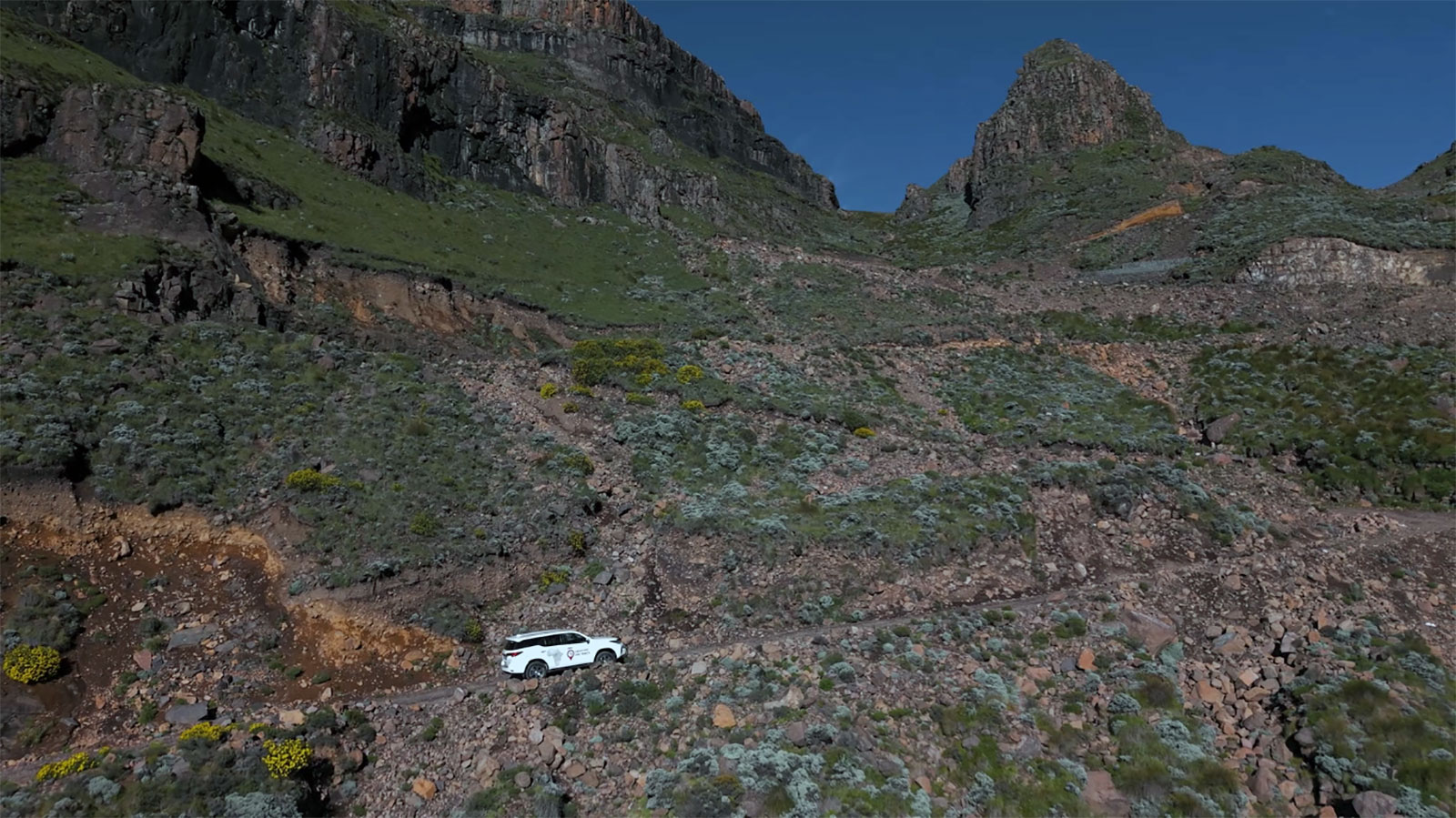
Is Sani Pass Dangerous?
Here's what you need to know before driving it.
6 Tips for Safely Navigating Sani Pass
Sani Pass is one of Southern Africa’s most iconic mountain drives, linking the KwaZulu-Natal foothills to the Lesotho highlands via a series of dramatic gravel switchbacks that climb to over 2,800 metres above sea level. It’s a bucket-list route for off-road enthusiasts, photographers, and adventure travellers. Still, its reputation for steep gradients, unpredictable weather and technical driving conditions raises one question almost every visitor asks: is Sani Pass actually dangerous?
In this guide, we break down exactly what makes the pass challenging, the vehicle and experience you’ll need to tackle it safely, and why so many travellers opt for a guided tour instead of going it alone. Whether you’re planning a self-drive adventure or weighing up expert-led options, here’s everything you need to know before you set off.
Is Sani Pass Dangerous?
Sani Pass has built a reputation over the years as one of Southern Africa’s most dramatic mountain roads, and for good reason. With steep gradients, sharp switchbacks, changing weather conditions and a summit reaching over 2,800 metres above sea level, it is certainly not an ordinary drive.
But is Sani Pass actually dangerous? The honest answer is: it can be, if it is approached incorrectly.
For properly equipped 4×4 vehicles driven carefully and responsibly, thousands of people travel Sani Pass safely every year. Most problems on the pass are usually linked to a few common factors: unsuitable vehicles, inexperienced drivers, poor weather decisions, or simply underestimating the conditions.

Why Sani Pass Can Be Challenging
Unlike a standard tarred mountain road, Sani Pass is a rugged gravel pass that climbs rapidly from the foothills of KwaZulu-Natal into the high mountains of Lesotho. The road conditions can change significantly depending on recent weather and maintenance work.
Heavy rainfall can wash away sections of the road, create loose rocks, or deepen erosion channels. In winter, snow and ice can make certain sections extremely slippery, while thick mist and fog can reduce visibility dramatically.
One of the biggest surprises for many visitors is just how quickly conditions can change on the mountain. It is not unusual to experience sunshine at the bottom of the pass and freezing temperatures, wind, or dense cloud at the top.
Altitude can also play a role. As you climb higher, the thinner air can cause fatigue, headaches, or reduced concentration for some people, particularly if they are not used to higher elevations.
Vehicle Requirements Matter
A proper low-range 4×4 vehicle is legally required to drive Sani Pass, and for good reason. The final section near the top of the pass is steep, rocky, and demanding, particularly in wet or icy conditions.
Many visitors incorrectly assume that all SUVs or all-wheel-drive vehicles are suitable for Sani Pass, but this is not always the case. Ground clearance, tyre condition, and low-range capability all make a significant difference on the mountain.
Tyres are especially important. Good traction can make a huge difference on loose gravel, muddy sections or icy roads.
Experience Matters
Driving the Sani Pass requires more than simply having the correct vehicle. Off road driving experience is extremely important, particularly when descending the pass. In fact, many experienced drivers will tell you that coming down the pass is often more challenging than going up.
Recovery services on the pass can also be slow and very expensive, and cell signal is unavailable in many areas. This is why have the right vehicle and decent off-road driving experience are so important before attempting the drive.
Check Conditions First
Before travelling to Sani Pass, it is essential to check recent road and weather conditions, especially during winter or after heavy rain.
Snowfall, ice, flooding, or severe mist can temporarily make the pass unsafe, even for experienced drivers. Conditions at the top of the pass can also be completely different from conditions in Underberg below.
Local operators and guides often have the most accurate and up-to-date information, as mountain weather forecasts are not always reliable for the pass itself.

A Guided Tour Is Often the Best Option
For visitors without off-road driving experience, the correct vehicle or confidence driving steep mountain roads, joining a guided tour is often the safest and most enjoyable way to experience the Sani Pass.
Instead of concentrating on the road, guests are able to relax and enjoy the scenery, cultural experiences, and incredible viewpoints along the route.
At Lesotho On Track, our guides have almost two decades of combined experience driving Sani Pass in all kinds of conditions. Their local knowledge, experience, and understanding of the mountain allow guests to experience the pass safely, comfortably, and stress-free.
Your Adventure Starts Here
Sani Pass 4x4 Tour Packages
Sani Pass should absolutely be respected, but it should not be feared.
With the correct vehicle, sensible preparation, and responsible driving, it is an unforgettable and incredibly rewarding mountain experience. And for those who would prefer to leave the driving to experienced professionals, a guided tour offers a fantastic way to experience one of Southern Africa’s most spectacular roads safely and comfortably.
FAQ's: Is Sani Pass Dangers
Is Sani Pass dangerous?
Sani Pass can be dangerous if approached incorrectly, but it’s driven safely by thousands of people every year. Most incidents are linked to unsuitable vehicles, inexperienced drivers, poor weather decisions, or underestimating the conditions.
What makes Sani Pass challenging to drive?
Sani Pass is a rugged gravel mountain pass with steep gradients and sharp switchbacks, climbing to over 2,800 metres. Conditions can change quickly — rain can wash away sections or expose loose rock, while winter brings snow, ice, and thick mist that reduces visibility.
What vehicle do I need for Sani Pass?
A proper low-range 4×4 is legally required. Not all SUVs or all-wheel-drive vehicles qualify — ground clearance, tyre condition and genuine low-range capability all matter, especially on the steep, rocky final section near the summit.
Do I need off-road driving experience to drive Sani Pass?
Yes, off-road experience is strongly recommended, particularly for the descent, which many experienced drivers find more challenging than the climb. Recovery services on the pass are slow and expensive, and cell signal is unreliable in many areas.
Should I check conditions before driving Sani Pass?
Yes, always check current road and weather conditions before setting out, especially in winter or after heavy rain. Conditions at the summit can differ dramatically from those at the base, and local operators typically have more accurate, up-to-date information than general weather forecasts.
Is a guided tour better than self-driving Sani Pass?
For visitors without the right vehicle, off-road experience or confidence on steep mountain roads, a guided tour is often the safer and more enjoyable option, allowing guests to focus on the scenery rather than the driving.
Contact us to start planning your perfect Sani Pass Adventure.
An Adventure Awaits in Africa's Hidden Paradise
Contact Us Here
Address
Shop 21, Troutwalk Centre, 12 Sani Road, Underberg, 3257, KZN, South Africa
Call or WhatsApp us
+27 (0) 72 900 2304
Popular Articles
Popular Tours
About Lesotho on Track
2026 Lesotho on Track.
